 ES
ES

SAGSE South America 2026
Betcore at SAGSE South America 2026: One API, Three Verticals for the New LATAM Player
March 18 & 19, 2026 at the Hilton Buenos Aires Hotel & Convention Center
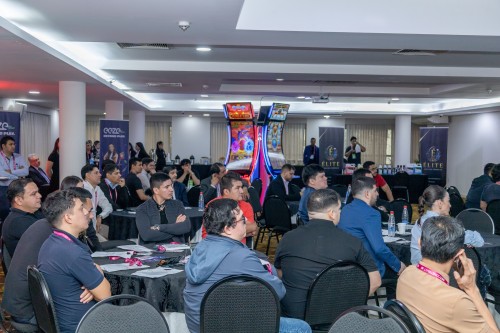
Within the framework of SAGSE South America 2026, taking place on March 18–19 at the Hilton Buenos Aires Hotel & Convention Center, Betcore presents its “one API, three verticals” approach, integrating TVBET, ElCasino, and Bet on Games into a single ecosystem. In this interview, the company discusses which verticals are leading in LATAM, what seamless integration truly means in complex markets, and its strategy for scaling across the region without fragmenting the product.
Your pitch is “one API, many verticals”. In LATAM specifically, which verticals are outperforming expectations—and what does that tell you about player preferences in the region?
Our concept of “one API, 3 verticals” is not just a marketing message. It is an architectural solution that brings together three strong and popular directions: TVBET (live TV games), ElCasino (classic live casino), and Bet on Games (crash & slots) into one unified product.
Through a single technical entry point, operators gain access to the entire portfolio, covering three of the most in-demand gaming verticals globally.
Historically, our entry into LATAM began with TVBET. Even when we operated exclusively with live TV games, we were already seeing strong organic growth and clear market interest.
What is outperforming?
- Live TV games show consistently high engagement and retention.
• The crash segment (Bet on Games) is demonstrating accelerated growth.
• Classic live formats such as roulette and poker are growing more steadily but remain stable and reliable.
This tells us a lot about the LATAM player profile.
LATAM is:
- a region with a deep-rooted sports culture;
- a strong betting mindset;
- high sensitivity to dynamics and emotional engagement.
Players here are used to betting logic: odds, multiple betting options, and fast outcomes. That is why TVBET became a natural bridge between sportsbook and casino. Our formats with betting coupons, a wide range of markets, and short rounds fit seamlessly into local player behavior.
Crash games amplify this dynamic even further: instant decisions, cash-out control, and high emotional intensity.
At the same time, LATAM is not only about adrenaline. The region has a long-standing lottery and traditional gaming culture, including keno, bingo, poker, and roulette. That is why traditional live formats and lottery-based mechanics continue to show strong demand.
The conclusion is clear. LATAM is a market of hybrid players. They are looking for:
- speed,
- variety in betting options,
- familiar mechanics,
- and an easy entry experience.
A multi-vertical model allows us to cover all of these expectations within one ecosystem.
LATAM operators care about speed-to-market, stability, and payments reality. What does “seamless integration” actually mean in practice—and where do integrations most often break in LATAM?
In LATAM, seamless integration is not a theoretical concept. It is essential for remaining competitive.
Operators work in an environment shaped by:
- rapidly evolving regulation;
- complex and sometimes unstable payment infrastructure;
- intense competition;
- strong pressure on launch timelines.
When we talk about seamless integration, in practice, it means:
1. Timeline
The average integration period depends on the operator’s structure and the selected verticals. With a standard API connection and an established wallet flow, the process can take just a few weeks. More customized setups naturally require more time. On our side, we adapt to the partner’s architecture and work within agreed deadlines.
2. Compliance & certification
LATAM is not uniform. Brazil, Mexico, Colombia, and Peru all operate under different regulatory frameworks. We prepare technical documentation, RTP reports, and game specifications in advance and support operators in communication with local auditors when required.
3. Operational support
Post-launch support is critical. Traffic can spike quickly due to major sports events or strong marketing campaigns. Our technical team monitors performance and latency, especially for live streaming, to ensure stability under peak load conditions.
How do you localize a diverse game portfolio for very different LATAM markets without fragmenting the product—and what’s your playbook for scaling across the region?
LATAM cannot be approached as a single market. Brazil is different from Mexico, Argentina, or Colombia.
Our strategy balances a standardized product core with flexible adaptation of the interface and mechanics.
1. Content and volatility
The Bet on Games portfolio includes slots and crash titles with varying volatility profiles and gameplay dynamics. This allows operators to fine-tune their content mix to local preferences without modifying the technical foundation.
2. Language and interface
The live stream runs in English, but:
- the UI is localized into Spanish and Portuguese;
- game rules can be adapted;
- marketing materials are prepared for each specific market.
This lowers the entry barrier for players without creating separate product versions for every country.
3. Responsible Gaming
The region is gradually strengthening responsible gaming requirements. We provide transparent RTP data, betting history tools, and configurable limits so operators can comply with local standards.
Scaling Playbook
Our approach to scaling in LATAM follows clear stages:
- Entering through a strong vertical anchor, historically TVBET.
- Analyzing player behavior and performance metrics.
- Expanding with crash and slot content to increase LTV.
- Adding live casino as a retention tool for high-value players.
With one API, operators can expand step by step without restarting the integration process.
Final Perspective
LATAM is an emotionally driven market with a strong sports culture and growing technological maturity.
The “one API, three verticals” model works effectively here because it:
- reduces operational complexity;
- accelerates time-to-market;
- enables flexible product strategy without technical fragmentation.
And in a region where speed and adaptability matter, this becomes a real competitive advantage!